Featured

Velocity is baseball’s hot commodity .

Velocity in baseball has become paramount, necessary and much sought after. Teams from travel baseball, travel softball, to high schools., colleges and of course, professional baseball. The athlete is also chasing improved . Everyone knows that velocity has become the top dog, the big attraction. The data supports the fact regardless of what some coaches may be spewing out. Velocity is very important.

Following our velocity training, plus 10 mph!⚾️🌶

The data shows us that the average fastball in the major leagues continues to climb each year. Analytics has shown us that when velocity goes up your value as a pitcher goes up. The question is why is velocity trending upward, is it better genes, non GMO foods, what? The answer lies within sports worldwide. Why do Olympic records fall each year? Athletes are running faster, jumping higher, swimming faster at every world event. In 1954, Roger Bannister did the unthinkable, he ran a mile in less than four minutes. The four minute barrier is now the standard for those running the mile, over 1.400 male athletes have broken the four minute barrier.

I have been involved in professional baseball for 34 years. The standard for the fastball has dramatically increased over the years. Regardless, why are these pitchers throwing harder than ever before. Well, the first reason is in the strength and conditioning field. For years, baseball was slow to adapt to these principles, thinking pitchers would get too bulky to perform well. The author of a major league record 7 no hitters, Nolan Ryan, wrote that he used to “sneak” from the Angels facility to the football facility to lift weights. Sounds like he was on to something (this was in the 70’s), he arguably has the best fastball ever. I can tell you that when strength coaches were introduced in to baseball clubhouses there was push back, resistance. Let’s just fast forward, today every major league team has two strength and conditioning coaches, each minor league team has a strength coach. The training plans have gone from ” don’t get any one hurt” to an aggressive plan individualized for each player based on specific needs and the position each athlete plays. I used to hear the risk/ reward phrase thrown out all the time, not any more. It is all about the reward.

The use of pitching labs, wearable devices that measure movements, extreme high speed cameras have also aided in better instruction. The slow motion footage of an athlete throwing is more accurate than any human eye, regardless of how well that eye has been trained. The wearable monitors have helped researchers and coaches better understand how the human body moves most efficiently and most powerfully. Research has taught those people in player development( coaches) that arm action can be changed successfully and coaches must address this subject for athletes who want to throw hard . The new age pitcher is learning how his body should move during a throw, what each body part is responsible for and when everything should happen. Sequencing, is a new word for baseball but it can be easily explained to any 10 year old. If we ask them what did they put on first, socks or shoes? If they did it in reverse order- well that just doesn’t work that well, right?

Velocity is being taught, this is a newer concept developing over the last decade. If you have a young athlete, check the facts and program out before you commit. There are NO short cuts. Elite throwing is a toe nail to finger nail movement. Strength, power, range of motion and direction are necessary to get the velocity gains one is looking for. It also takes time and a commitment. Do not allow short term obstacles get in the way of long term goals.
The Comeback

I am 56 years old, close to 57. I am a former professional baseball player, a pitcher to be exact. My last competitive pitch was 32 or so years ago. I have been a minor league coach, a pitching coordinator and a major league pitching coach over the last 33 years. The reason for the background information lets the reader know where I have been, the Comeback, is where I am going. I am going to have everyone join me on this amazing comeback. The main obstacles, besides the obvious, is that I have had two hip replacements, I have had three knee operations, a shoulder repair, a torn elbow ligament and top of this aging process, arthritis is trying to crawl up my spine and into these long, thin fingers.

First attempt to throw my age in velocity.

Well, you see day one of the comeback, an embarrassing and miserable 53 miles per hour, measured by the amazing pocket radar smart coach app. Another bit of pertinent information is that I am leading an arm care and velocity training class, twice a week at Diamond Fit Performance in North Raleigh, NC. Yes, this former Major League coach of eight years is pouring it out twice a week for his students, aged 11 to 19. Since the 2019 season ended I have received hard earned certifications in Driveline Youth Baseball Training, Rapsodo Pitching, Functional Movement Screen and I have finished all but the the final step of Driveline Foundations of Pitching. Put that on top of 33 years in professional baseball experience and I think we have the makings of a well educated class. The students are posting personal records for velocity each week but the real test will come as I begin to put myself through the rigors of the arm care and velocity training. I have consulted with physical therapists, certified strength and conditioning coaches as well as my knowledge attained from the new certifications for class content. Oh yea, did I say I was a major league pitching coach as recently as 2018? I have some advantages in my class, I once pitched for Dr. Mike Marshall, the creator of weighted ball training. Hmm, the plot thickens doesn’t it? Did you know Mike Marshall pitched in 106 games in 1974, won the Cy Young Award that year. He was 15-12 with 21 saves. He logged 208 innings pitches. Crazy! We cant even get starting pitchers to 200 innings in recent seasons.

I will keep everyone updated as the comeback moves forward. Lets put all the new concepts to the test! Along with some ancient concepts as well. Very few coaches have been privy to work with the hardest thrower ever, Aroldis Chapman, as well as with Dr. Mike Marshall, a Hall of Famer closer and many other of the best pitchers, coaches, people and analysts in the game of baseball. Next time, lets see if I can improve my velocity and throw my age.

How Fast is a Fastball

One pitch that every pitcher throws is a fastball, even if it is slow, we call it a fastball. Fastballs definitely come in different shapes, speeds and sizes. As far back as little league baseball there are those who throw harder than the rest of the herd. Those players are generally very good at baseball or softball. I mean the game is all about catching and throwing the ball, right? The pitcher throws the ball to the catcher, the batter hits the ball to shortstop who then catches it and throws it on to first base. Throwing the ball is an vital ingredient to the game and we all need to be good throwing the ball. Let’s talk about the fundamentals of the fastball. The grip, so often overlooked, is important to throwing the ball fast and with accuracy. The four seam grip is one all players should use when when they warmup and from each position they play. Physics tells us the four seam fastball , rotating quickly through the air keeps the ball straighter than the other grips, the ball has more spin and has better “ carry.” Alan Nathan, masterfully explains the physics of baseball and is the sports’leading analyst in this field. The video below explains the grip

Discussing the four seam grip

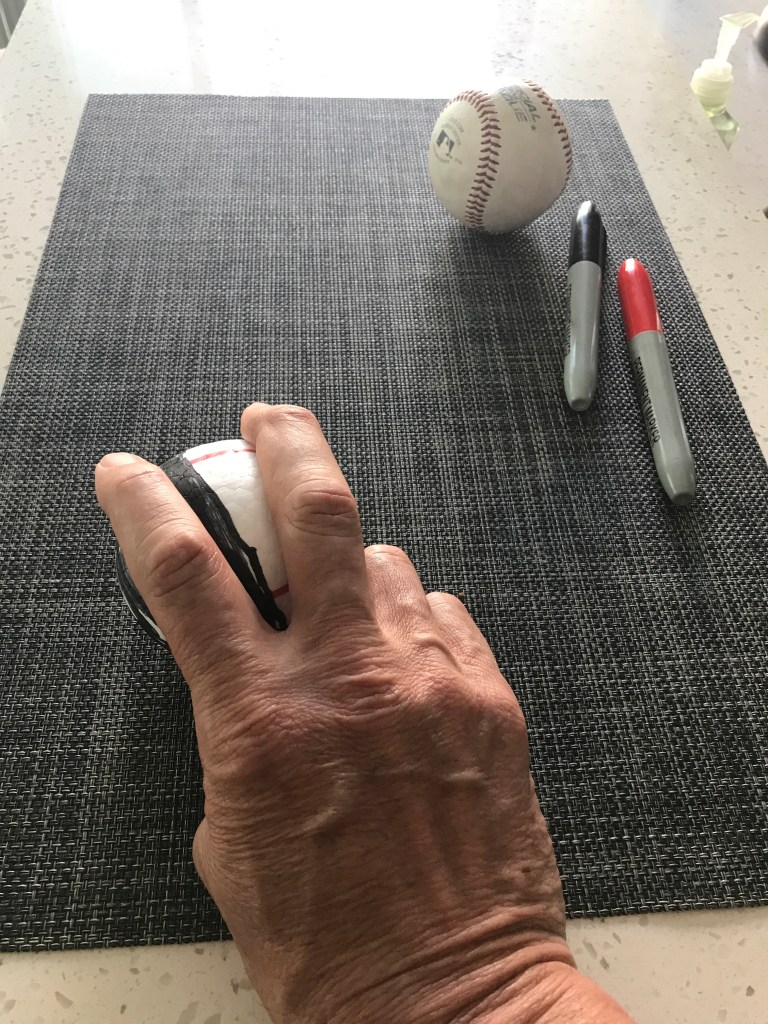
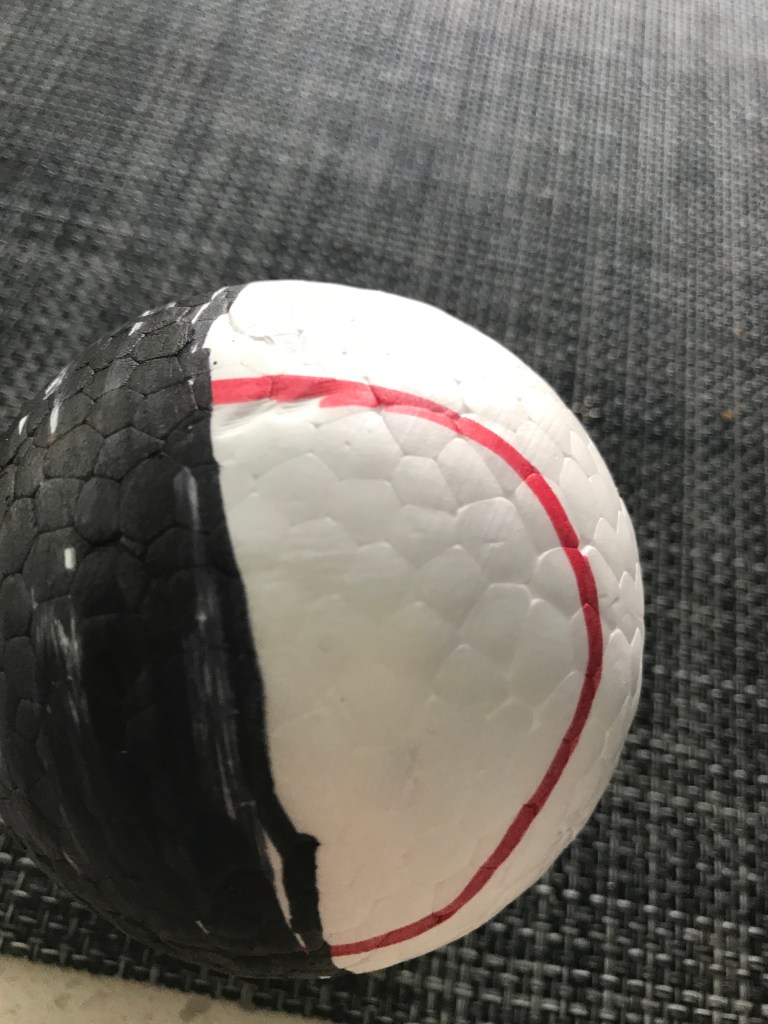
There are different fastballs; four seam, two seam, split fingered, cut and batting practice. Let’s stick to the most basic today, the four seamer. I have had the benefit of working from Little League to the Major Leagues and every level in between from travel ball to minor league baseball. I have coached girls as well, from youth to teens. The foundation of your fastball starts with your grip. Being good at throwing fast and accurately can take time but it is an amazing journey. It takes deliberate practice, consistency and takes being persistent. I have witnessed many players develop powerful throwing arms, I have seen many players increase their accuracy; success at any level is enjoyable and worth the time put in to improve. Spin on the baseball can give us feedback to whether we are throwing correctly or not. A good practice drill for this is to take your ball and color half of it black with a sharpie. ( dissecting through the four seam grip). The colors or shading of the ball will be apparent when throwing the baseball or softball properly- the thrower’s fingers, hand and wrist behind the ball at release. The wrist making a wave good bye motion and the fingers coming down and through the ball. I have seen coaches uses black electrical tape for shading the ball for this throwing drill as well. Once, we can do it right at 25 feet, take four steps back and so on. Another variation is to start with the throwing side knee on the ground. This let’s us just work on the path of the throwing arm, the grip and the release of the ball.

My inside practice ball. It is colored half black, detecting through the four seam grip area.
The Grip. Simple tools to get the ball ready. A hard ball for outside practice
One knee drill showed. Notice the fingers behind the ball at point of release.

We want to be able to measure our successes and gains in fastball speed. Once players arms are in proper shape there is nothing wrong with measuring a players progress. A tool I use is the Pocket Radar. I bought mine on Amazon. The measurements make it fun for the players, especially when they are young. Remember, that we want to celebrate effort and improvements. I have found that this quantifying of speed has kept my players working on their throwing fundamentals when they are at home, not just on the practice field. Coaches, we can measure speed on balls thrown from any where on the field, not just the pitchers mound. We get a baseline speed, record it and then measure improvement. Heck, I often measure the speed with the player throwing into a net. Build a strong foundation, grip it correctly and rip it with intent! Let me know how fast your fastball is.