Invasion of the River Turtles

The River Turtles of Pulaski pulled in to town donned in their emerald green uni’s for a weekend contest against the Flyboys of Greenville, Tennessee. Pulaski is in Virginia. The town was named after a Count Casimir Pulaski, a Revolutionary war hero from Poland. The population of the town is around 10,000. According to Trip Advisor the number one attraction is Calfee Park, which is summer home to the River Turtles. Pulaski first hosted professional baseball back in 1942. The city has hosted young players from the Brooklyn Dodgers to the New York Yankees, most recently. Calfee park was built in 1935 as part of the New Deal enacted by President Franklin Roosevelt. This historic ballpark has been used for horse shows, fairs, concerts, exhibitions and of course, baseball. The park was renovated in 1999. Calfee park has been added to the National and State Historic Landmarks Registry.

The River Turtles own one of the leagues most potent offenses. This should be quite the weekend matchup. The Flyboys pitching staff holds the Turtles down in game one, allowing just five hits and two runs. The pitching staff, which currently leads the league in strikeouts, struck out 14 in this game while issuing only one walk. The offense made the most of their eight hits and five walks. The highlight of this game was young RHP, Austin Troesser. He absolutely dominated the opposition, striking out five of the six hitters he faced. He was one pitch away from an immaculate innings, when with an 0-2 count he allowed a broken bat grounder to second base. He went on the fan the side in the fifth inning for extra measure. This was a far cry from his last outing where he needed thirty pitches to get three outs. Today, he needed 19, for two outstanding innings of work. Game two of the series did not go as planned. We dropped a 6-4 decision to the River Turtles. This game we simply did not make the pitches or plays to win the game. The first batter of the game bunted back to the pitcher who flubbed ground ball for an error to start the game. As a matter of fact, the leadoff hitter was on base four times in seven innings today. Why is that a big deal? The averages tell us that pitchers, E,R.A( earned run average) is 8.54 with a runner on first base and no outs. On the other hand, with one out and no one on base, the pitchers’ E.R.A. falls to 3.54. Five runs difference is noteworthy and as a pitcher and catcher we need to know how important keeping the leadoff hitter off base is for winning baseball.

The majority of our pitchers and catchers have their pitches called from the dugout by the head coach or pitching coach while in college. So, many of them do not have a great “feel” for calling the game. This league is about development, so the young men are on their own during the game. Many times, I may ask after the inning ” what were you thinking when you threw this pitch in a certain situation?) This is a great way to learn. One gets good judgement from experience and experience comes from bad judgement. In today’s game, I took a lot of notes. My notes are written on the lineup card where the last out of the innings is posted and what the opposing hitters do each at bat. I also makes notes on attempted bunts and stolen bases attempted. We also note the count in which these events occurred. In this game we did not attack or execute pitches on the 1-1 counts. I know we wrote about the importance of this pivotal count. We also did a poor job of reacting to what we see from the hitter. I will give a few examples. The first pitch of the at bat is a fastball on the outside part of the plate, strike one looking. The next pitch is a changeup up, that the hitters chases out of the strike zone. What would you throw the next pitch? We chose to throw a fastball in the middle of the plate for a no ball and two strike, 2 out double that scored a run. If we react to the previous swing of the hitter, we make him chase another pitch out of the strike zone. There is rarely a set up pitch, the pitcher should throw every pitch with the intent to get the batter out. Bad location hurts the pitcher more than bad selection, on most nights. We also chose to repeat in the zone breaking balls for a long double off the wall. Let me explain. First pitch of the at bat, curve in the dirt, ball one. Second pitch, another curve this time for a called strike. What are my options here? We chose to throw another curve ball, this time a little higher in the strike zone. Bad choice but a time to learn, not because of the result. Repeating off speed pitches in the strike zone gives the hitters a very good chance to time the pitch and measure the break. Please, remember in the strike zone to under the strike zone, often works. We also threw another hitter a 2-1 fastball that the left handed batter hit over the third base dugout He was late on this fastball in a hitter advantage count. When we see the hitter is late, we move the ball closer to the batter or we elevate the ball closer to him But we chose to throw a high slider which the batter laced into left center field. Another, time to learn- for the pitcher and catcher. My last rant, which is pitching 101 Every 0-1 count should not a breaking ball in the dirt. This is an advantage count for the pitcher which is a great time to work inside to inside off the plate. The catcher and pitcher need to on the same page with this strategy. So, communication with pitcher and catcher is crucial. They should talk between each inning to bounce ideas off one another and get feedback from each other on the next inning.
River Turtles

The Boys are off tomorrow and I am headed to Cary for a steak dinner. Enjoy every breath! LG Flyboys.

Steak and Scallops at Reys
Featured

Velocity is baseball’s hot commodity .

Velocity in baseball has become paramount, necessary and much sought after. Teams from travel baseball, travel softball, to high schools., colleges and of course, professional baseball. The athlete is also chasing improved . Everyone knows that velocity has become the top dog, the big attraction. The data supports the fact regardless of what some coaches may be spewing out. Velocity is very important.

Following our velocity training, plus 10 mph!⚾️🌶

The data shows us that the average fastball in the major leagues continues to climb each year. Analytics has shown us that when velocity goes up your value as a pitcher goes up. The question is why is velocity trending upward, is it better genes, non GMO foods, what? The answer lies within sports worldwide. Why do Olympic records fall each year? Athletes are running faster, jumping higher, swimming faster at every world event. In 1954, Roger Bannister did the unthinkable, he ran a mile in less than four minutes. The four minute barrier is now the standard for those running the mile, over 1.400 male athletes have broken the four minute barrier.

I have been involved in professional baseball for 34 years. The standard for the fastball has dramatically increased over the years. Regardless, why are these pitchers throwing harder than ever before. Well, the first reason is in the strength and conditioning field. For years, baseball was slow to adapt to these principles, thinking pitchers would get too bulky to perform well. The author of a major league record 7 no hitters, Nolan Ryan, wrote that he used to “sneak” from the Angels facility to the football facility to lift weights. Sounds like he was on to something (this was in the 70’s), he arguably has the best fastball ever. I can tell you that when strength coaches were introduced in to baseball clubhouses there was push back, resistance. Let’s just fast forward, today every major league team has two strength and conditioning coaches, each minor league team has a strength coach. The training plans have gone from ” don’t get any one hurt” to an aggressive plan individualized for each player based on specific needs and the position each athlete plays. I used to hear the risk/ reward phrase thrown out all the time, not any more. It is all about the reward.

The use of pitching labs, wearable devices that measure movements, extreme high speed cameras have also aided in better instruction. The slow motion footage of an athlete throwing is more accurate than any human eye, regardless of how well that eye has been trained. The wearable monitors have helped researchers and coaches better understand how the human body moves most efficiently and most powerfully. Research has taught those people in player development( coaches) that arm action can be changed successfully and coaches must address this subject for athletes who want to throw hard . The new age pitcher is learning how his body should move during a throw, what each body part is responsible for and when everything should happen. Sequencing, is a new word for baseball but it can be easily explained to any 10 year old. If we ask them what did they put on first, socks or shoes? If they did it in reverse order- well that just doesn’t work that well, right?

Velocity is being taught, this is a newer concept developing over the last decade. If you have a young athlete, check the facts and program out before you commit. There are NO short cuts. Elite throwing is a toe nail to finger nail movement. Strength, power, range of motion and direction are necessary to get the velocity gains one is looking for. It also takes time and a commitment. Do not allow short term obstacles get in the way of long term goals.

Get behind it

Get behind the ball

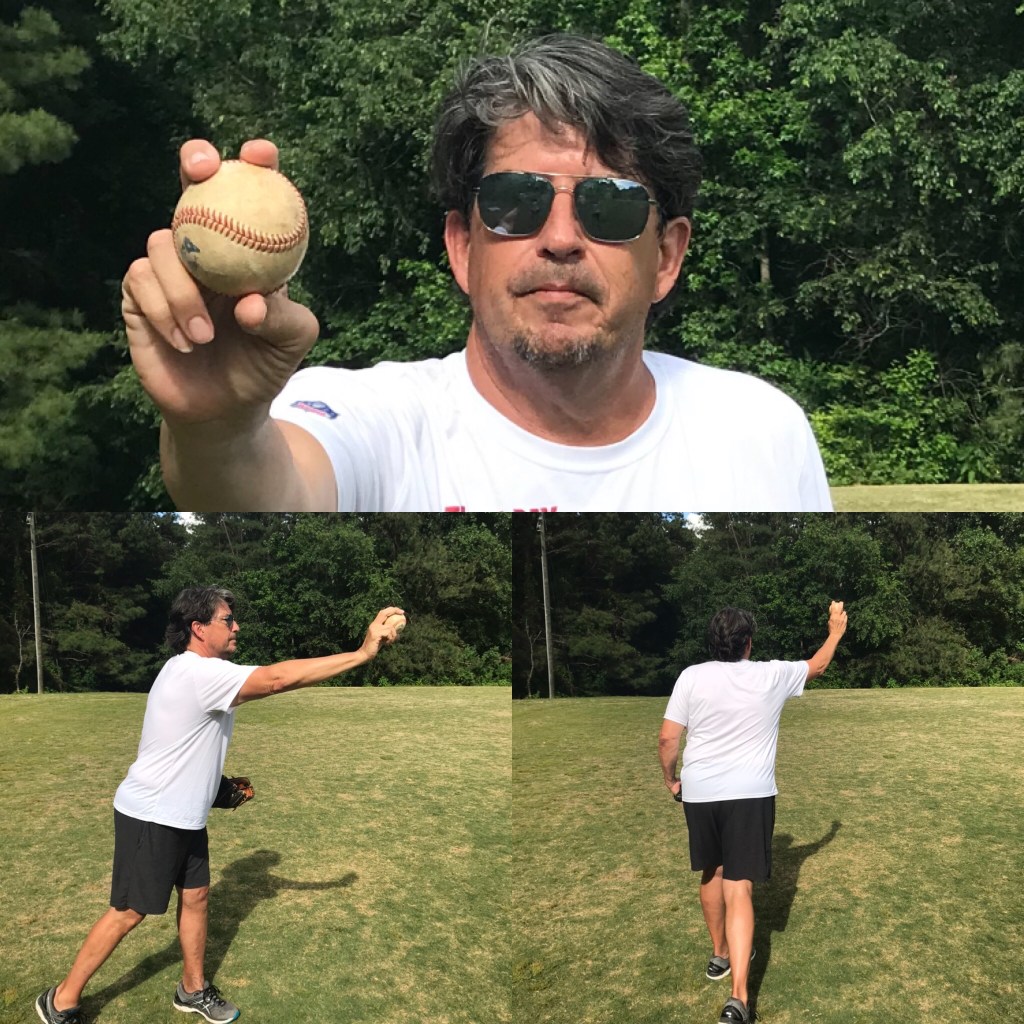
Throwing a ball the properly and powerfully requires a few absolutes. It also allows for individualism and warrants that the thrower eventually allow his or her athleticism shine. I want to encourage the thrower to take ownership of his or her throwing delivery. One area that the thrower must get right is that at release point we must be behind the ball. I hope to explain exactly what that statement means through some simple instruction and video.

When the thrower gets behind the ball, his fingers, the middle and index fingers, are powerfully on the ball at release, peeling the seams back to produce mighty back spin. Having one’s hand behind the ball, along with a good wrist snap gives the ball proper spin direction as well. ( imagination your middle finger as chalk, drawing a perfectly straight line on the chalk board, this equates to the right wrist snap). As you see in the pictures, the forearm is also behind the ball. And as any properly flowing kinetic chain, the throwing shoulder is also behind the ball at release point. As well as the chin and chest. Now that is a powerful position. The energy created at the ground has transferred up the legs, through the body and come out at the finger tips. An amazing motion to conquer and fun too. You can imagine yourself trying to push a wall down, go ahead and try. To exert the most force against the wall, you will find yourself in a similar position to the “behind the ball” position when throwing your favorite round ball.

Getting behind the ball. Don’t let the Bucs short or quarantine hair scared ya

One can see in the video that the torso, waist are in line with the intended target as wee. A throwers legs provide direction, among others factors, but proper direction of the stride leg gets us in position to be behind the ball with out torso, chin and chest. Try this. I am confident you know how to get behind each throw.

The basic four

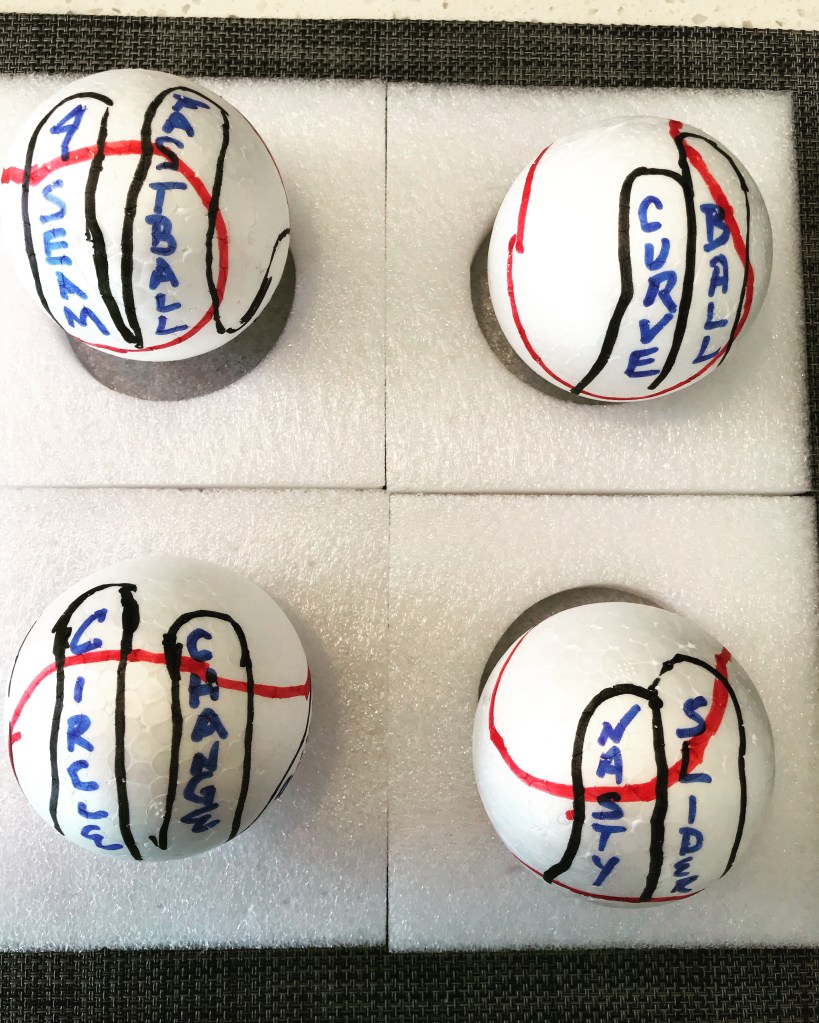
The quarantine training balls. Each grip illustrated
This young lady learned a nasty slider in 30 minutes using the quarantine training balls
This power curve was enhanced with the feedback of RM’s quarantine training balls.
Filthy moving changeup grip was explained using quarantine training balls
Four seam fastball quick tutorial
One knee fastball drill emphasizes staying behind the fastball with the fingers, hand, wrist, chin and chest

How Fast is a Fastball

One pitch that every pitcher throws is a fastball, even if it is slow, we call it a fastball. Fastballs definitely come in different shapes, speeds and sizes. As far back as little league baseball there are those who throw harder than the rest of the herd. Those players are generally very good at baseball or softball. I mean the game is all about catching and throwing the ball, right? The pitcher throws the ball to the catcher, the batter hits the ball to shortstop who then catches it and throws it on to first base. Throwing the ball is an vital ingredient to the game and we all need to be good throwing the ball. Let’s talk about the fundamentals of the fastball. The grip, so often overlooked, is important to throwing the ball fast and with accuracy. The four seam grip is one all players should use when when they warmup and from each position they play. Physics tells us the four seam fastball , rotating quickly through the air keeps the ball straighter than the other grips, the ball has more spin and has better “ carry.” Alan Nathan, masterfully explains the physics of baseball and is the sports’leading analyst in this field. The video below explains the grip

Discussing the four seam grip

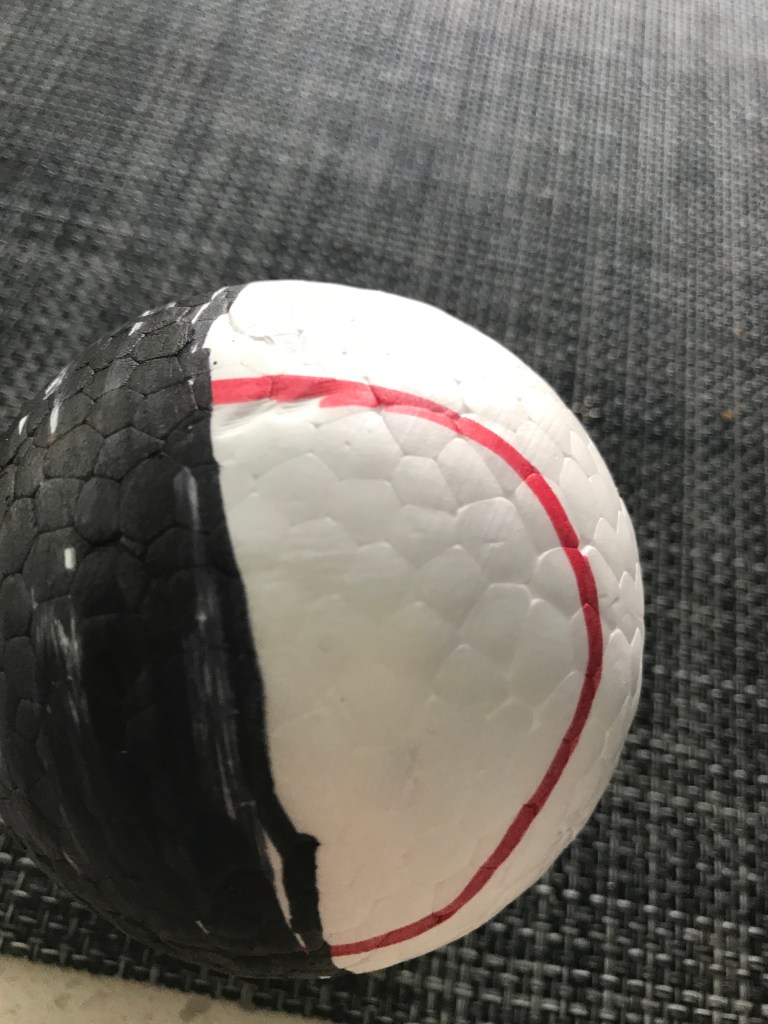
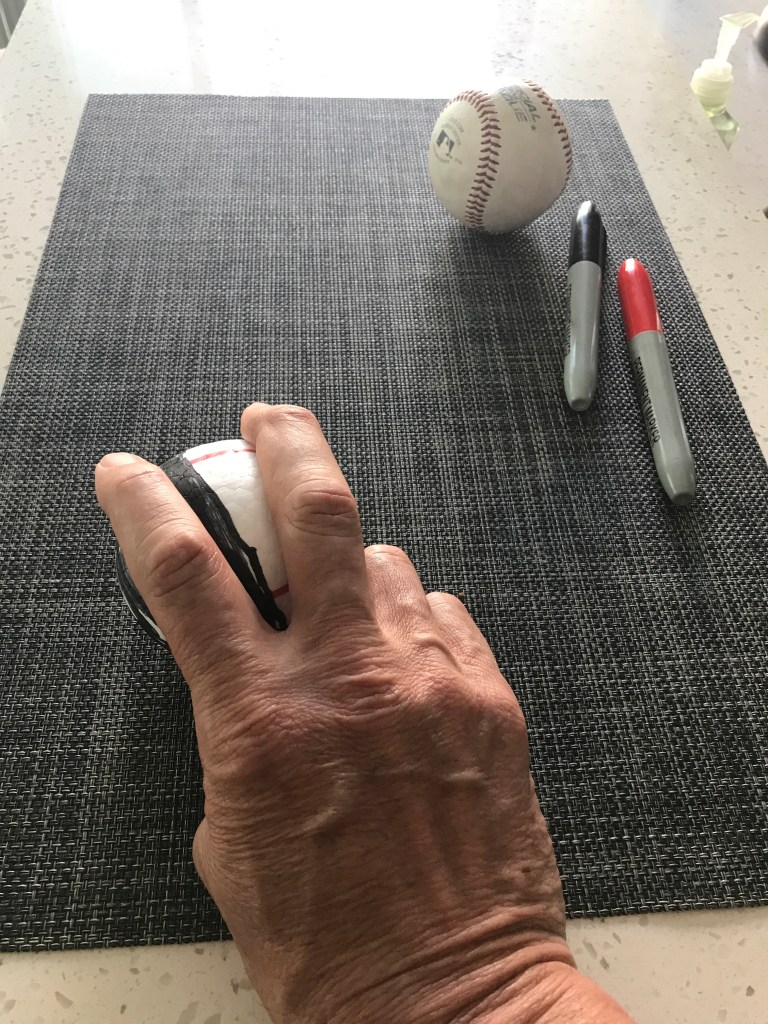
There are different fastballs; four seam, two seam, split fingered, cut and batting practice. Let’s stick to the most basic today, the four seamer. I have had the benefit of working from Little League to the Major Leagues and every level in between from travel ball to minor league baseball. I have coached girls as well, from youth to teens. The foundation of your fastball starts with your grip. Being good at throwing fast and accurately can take time but it is an amazing journey. It takes deliberate practice, consistency and takes being persistent. I have witnessed many players develop powerful throwing arms, I have seen many players increase their accuracy; success at any level is enjoyable and worth the time put in to improve. Spin on the baseball can give us feedback to whether we are throwing correctly or not. A good practice drill for this is to take your ball and color half of it black with a sharpie. ( dissecting through the four seam grip). The colors or shading of the ball will be apparent when throwing the baseball or softball properly- the thrower’s fingers, hand and wrist behind the ball at release. The wrist making a wave good bye motion and the fingers coming down and through the ball. I have seen coaches uses black electrical tape for shading the ball for this throwing drill as well. Once, we can do it right at 25 feet, take four steps back and so on. Another variation is to start with the throwing side knee on the ground. This let’s us just work on the path of the throwing arm, the grip and the release of the ball.

My inside practice ball. It is colored half black, detecting through the four seam grip area.
The Grip. Simple tools to get the ball ready. A hard ball for outside practice
One knee drill showed. Notice the fingers behind the ball at point of release.

We want to be able to measure our successes and gains in fastball speed. Once players arms are in proper shape there is nothing wrong with measuring a players progress. A tool I use is the Pocket Radar. I bought mine on Amazon. The measurements make it fun for the players, especially when they are young. Remember, that we want to celebrate effort and improvements. I have found that this quantifying of speed has kept my players working on their throwing fundamentals when they are at home, not just on the practice field. Coaches, we can measure speed on balls thrown from any where on the field, not just the pitchers mound. We get a baseline speed, record it and then measure improvement. Heck, I often measure the speed with the player throwing into a net. Build a strong foundation, grip it correctly and rip it with intent! Let me know how fast your fastball is.