Bring on the Axemen

The first home stand of the season ends with a two game set with the Kingsport Axemen. Yes, the Flyboys vs. the Axemen, sounds like a potential Netflix pilot. Kingsport is in Tennessee. It is 43 miles North, North East of Greenville. The city of Kingsport derived it’s name from the simplification of “King’s Port” which was the name given to the area by the early pioneers. The Long Island of the Holston River has a vast and rich history. It is a National Historic Landmark. It was the home of the sacred Cherokee council and a treaty site as well.
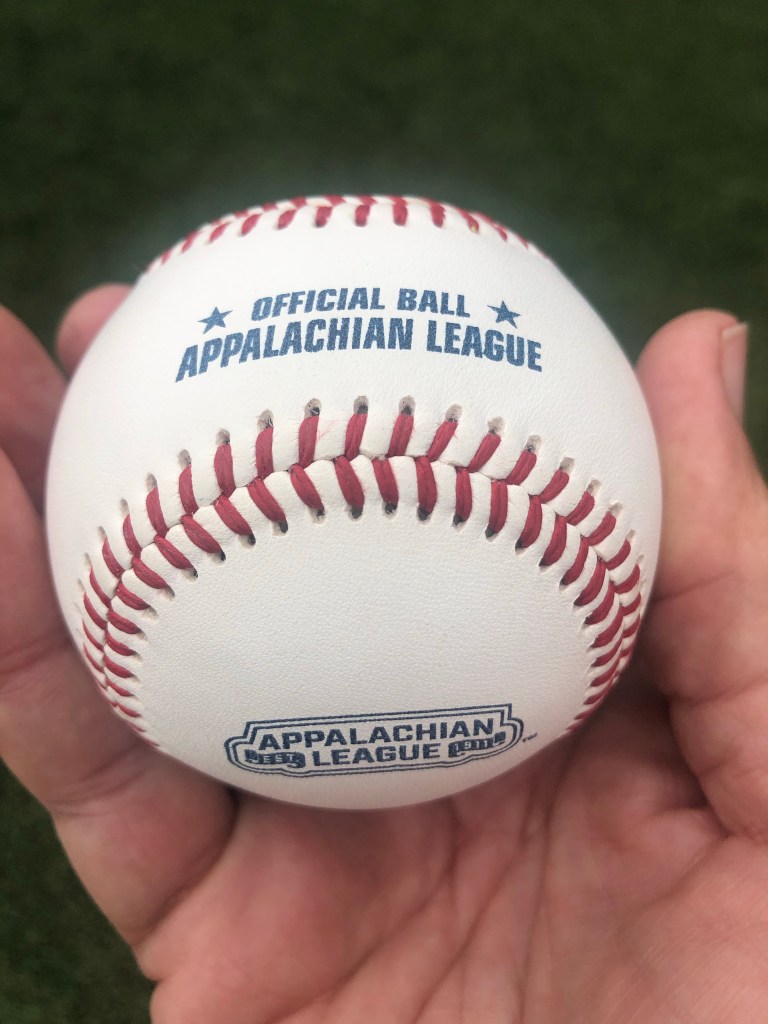
Official
Baseball of 2021 season

The previous night saw the Flyboys play an extremely sloppy game. We made several errors in the field and a couple of mental mistakes as well. The opposition was sloppy as well but were much sloppier. Pitching truly makes the world go around. On this night the Greenville pitching was not it’s sharpest. The staff worked behind in the count too often. Our goal for first pitch strikes is 60%. We did not come close to that expectation tonight. Early in the count, the pitcher needs to be aggressive. One of the first two pitches needs to be a strike 80% of the time. Tonight’s pitchers had several two ball and no strike counts, which is a recipe for disastrous performance. 69% of strike outs begin with strike one. Over 70% of walks begin with ball one.

Another emphasis for the Flyboys hurlers is to win the one ball, one strike counts. This is the largest swing count in baseball when it comes to offensive production. When the count moves to 2 balls and 1 strike, the hitters historically hit over .400. This a very high average, if you did not know. When the counts moves to 1 ball and 2 strikes, the hiiter’s batting average falls to under .180. This is a low output for the hitter. Those numbers make the 1-1 the largest “swing”‘count in baseball.

On this night we executed pitch after pitch. Our starting pitcher,

Conner Harris, pitched five innings and only threw 49 pitches. He averaged less than 10 pitches inning. The average pitch count per inning at this level is 19 pitches. So,’he had an absurdly efficient outing. He set the tone. We had two relief pitchers finish the game. We attacked the opposing hitters early in the count, we dominated the 1-1 counts. For the night the Flyboy pitches only threw 95 pitches in 9’innimgs. A great night for this pitching coach. We won a tightly contested game, 1-0. Game two of this series was postponed due to heavy rain. So technically we won our first series. Off to play in Johnson City tomorrow.

Follow the rainbow for Flyboys baseball

Opening Day – Appy Style

I attended seven opening days in Major League Baseball amd there is nothing like it. I also was in uniform for twenty six in the minor league opening nights but never one in the Appalachian League. On this day, the Flyboys of Greenville travel to Elizabethton,Tn. It is a commuter trip, meaning we drive to the city, play and return home after the game. This field in Elizabethton is the smallest in all of minor league baseball There are three sets of grandstands, each very different from the other. The clubhouse is “ dusty”,the playing surface is adequate for this league. The scoreboard does not work, almost like the season has snuck up on the fine folks there. The mounds are flat -both game and bullpen. This ballpark sits on the Watauga River. The Watauga runs from Grandfather Mountain in North Carolina into Eastern Tennessee. The river that rubs aside the ballpark is beautiful

The game is nearly underway. A former player of mine is the manager for newly coined River Riders. The attendance is sparse, the excitement and energy from the players is not. The teams, battle for nine innings. Some sloppy play from time to time but expected as each team had one workout before opening day. Let not one forget, these excitable players are collegians not paid professionals. Intensity, hustle and effort spilled out from initial pitch to last swing of the bat. The Flyboys fall in the season opener by one run. The men played hard, tomorrow is a new day and I can’t wait to be a part of it.

Meeting The Flyboys

The inaugural season for the USA Baseball and MLB run Appalachian League starts one day after reporting day. The day before our first and only preseason workout we board a bus headed to East Tennessee State University baseball stadium. The team has 16 pitchers to begin the season. I have researched the players on the roster. I am trying to learn as much as I can about each athlete before meeting them in person.

The teamed donned these sweet Appy league tee shirts and shorts on this warm, muggy Tennessee afternoon. I have roster in hand so that I can learn the names of the players as quickly as possible. Oh man did we make a blunder the initial day. We wore the shirts with no numbers on the back. After a team briefing from the manager, coaches, medical team and USA Baseball personnel, I can get my first sit down with the pitchers.

I have learned over the years how short the attention span of us males can be- well limited. So, I am going to be loud, to the point, make it light, informative and humorous to break up the conversation. The most glaring issue is who is this guy talking, me. So an introduction of my playing and coaching history is the leadoff hitter. Secondly is finding out who is ready to pitch the next day. By the end of the workout I announced who will toe the rubber the first two days of the season. It did make me feel uncomfortable asking a pitcher who is in the middle of throwing a bullpen , “ what is your name again”. Well, we made it through the first day despite not knowing anyone’s name. In professional baseball the coaches are called by their first name, not coach. But these kids call me coach, which on the inside makes me smile. Coach is the second greatest moniker, next to Dad!! Tomorrow, is a commuter trip to play in Elizabethton, Tn. A new adventure, a new city and a new league kicks it out tomorrow.

Velocity is baseball’s hot commodity .

Velocity in baseball has become paramount, necessary and much sought after. Teams from travel baseball, travel softball, to high schools., colleges and of course, professional baseball. The athlete is also chasing improved . Everyone knows that velocity has become the top dog, the big attraction. The data supports the fact regardless of what some coaches may be spewing out. Velocity is very important.

Following our velocity training, plus 10 mph!⚾️🌶

The data shows us that the average fastball in the major leagues continues to climb each year. Analytics has shown us that when velocity goes up your value as a pitcher goes up. The question is why is velocity trending upward, is it better genes, non GMO foods, what? The answer lies within sports worldwide. Why do Olympic records fall each year? Athletes are running faster, jumping higher, swimming faster at every world event. In 1954, Roger Bannister did the unthinkable, he ran a mile in less than four minutes. The four minute barrier is now the standard for those running the mile, over 1.400 male athletes have broken the four minute barrier.

I have been involved in professional baseball for 34 years. The standard for the fastball has dramatically increased over the years. Regardless, why are these pitchers throwing harder than ever before. Well, the first reason is in the strength and conditioning field. For years, baseball was slow to adapt to these principles, thinking pitchers would get too bulky to perform well. The author of a major league record 7 no hitters, Nolan Ryan, wrote that he used to “sneak” from the Angels facility to the football facility to lift weights. Sounds like he was on to something (this was in the 70’s), he arguably has the best fastball ever. I can tell you that when strength coaches were introduced in to baseball clubhouses there was push back, resistance. Let’s just fast forward, today every major league team has two strength and conditioning coaches, each minor league team has a strength coach. The training plans have gone from ” don’t get any one hurt” to an aggressive plan individualized for each player based on specific needs and the position each athlete plays. I used to hear the risk/ reward phrase thrown out all the time, not any more. It is all about the reward.

The use of pitching labs, wearable devices that measure movements, extreme high speed cameras have also aided in better instruction. The slow motion footage of an athlete throwing is more accurate than any human eye, regardless of how well that eye has been trained. The wearable monitors have helped researchers and coaches better understand how the human body moves most efficiently and most powerfully. Research has taught those people in player development( coaches) that arm action can be changed successfully and coaches must address this subject for athletes who want to throw hard . The new age pitcher is learning how his body should move during a throw, what each body part is responsible for and when everything should happen. Sequencing, is a new word for baseball but it can be easily explained to any 10 year old. If we ask them what did they put on first, socks or shoes? If they did it in reverse order- well that just doesn’t work that well, right?

Velocity is being taught, this is a newer concept developing over the last decade. If you have a young athlete, check the facts and program out before you commit. There are NO short cuts. Elite throwing is a toe nail to finger nail movement. Strength, power, range of motion and direction are necessary to get the velocity gains one is looking for. It also takes time and a commitment. Do not allow short term obstacles get in the way of long term goals.

Get behind it

Get behind the ball

Throwing a ball the properly and powerfully requires a few absolutes. It also allows for individualism and warrants that the thrower eventually allow his or her athleticism shine. I want to encourage the thrower to take ownership of his or her throwing delivery. One area that the thrower must get right is that at release point we must be behind the ball. I hope to explain exactly what that statement means through some simple instruction and video.

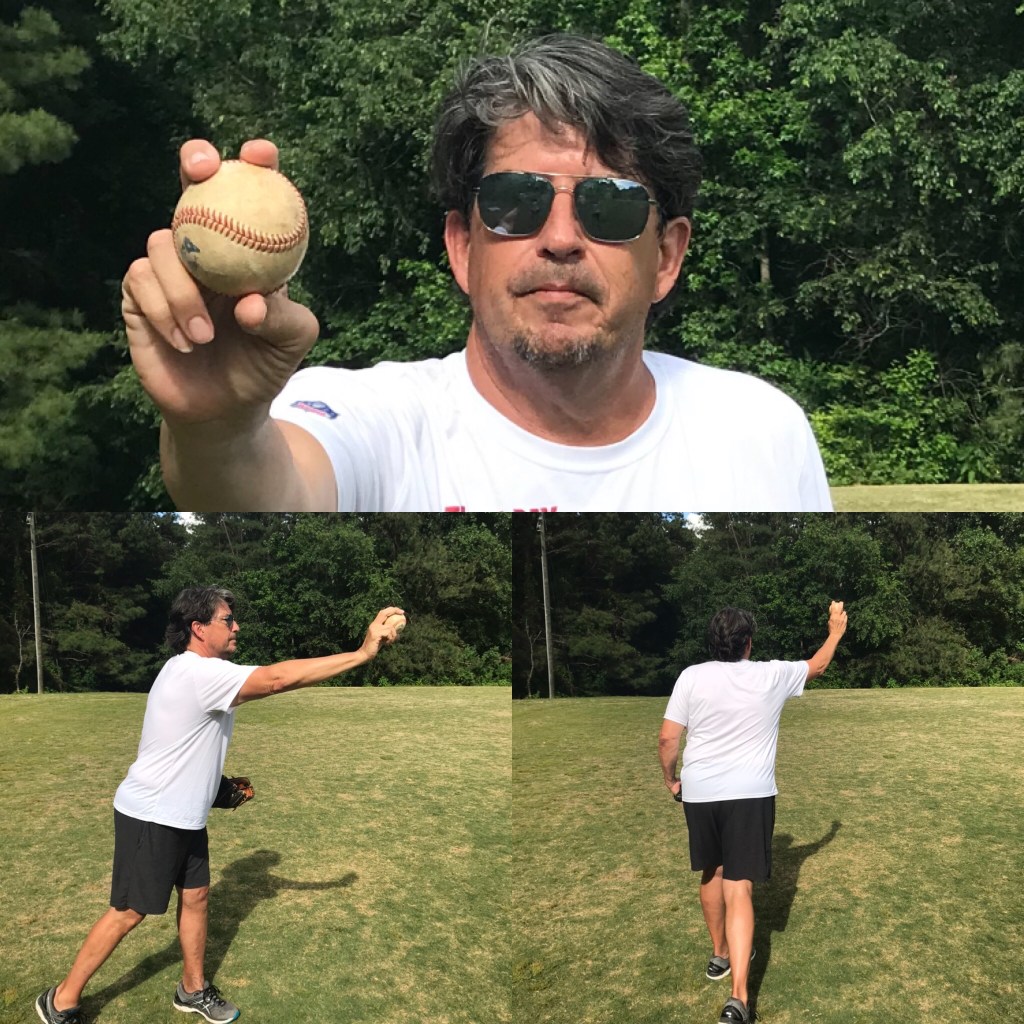
When the thrower gets behind the ball, his fingers, the middle and index fingers, are powerfully on the ball at release, peeling the seams back to produce mighty back spin. Having one’s hand behind the ball, along with a good wrist snap gives the ball proper spin direction as well. ( imagination your middle finger as chalk, drawing a perfectly straight line on the chalk board, this equates to the right wrist snap). As you see in the pictures, the forearm is also behind the ball. And as any properly flowing kinetic chain, the throwing shoulder is also behind the ball at release point. As well as the chin and chest. Now that is a powerful position. The energy created at the ground has transferred up the legs, through the body and come out at the finger tips. An amazing motion to conquer and fun too. You can imagine yourself trying to push a wall down, go ahead and try. To exert the most force against the wall, you will find yourself in a similar position to the “behind the ball” position when throwing your favorite round ball.

Getting behind the ball. Don’t let the Bucs short or quarantine hair scared ya

One can see in the video that the torso, waist are in line with the intended target as wee. A throwers legs provide direction, among others factors, but proper direction of the stride leg gets us in position to be behind the ball with out torso, chin and chest. Try this. I am confident you know how to get behind each throw.

Learning to Fly

My experience in baseball has encompassed many areas and reached great heights. I played the game professionally, I coached for three decades from the rookie leagues to the major leagues. After a near eight year run as a major league coach, I climbed back on the busses to coach in the minors once again last season. The little league fields have not escaped my coaching journey, my son played baseball from age seven to age twenty three. I have coached girls Fastpitch softball, my daughter was one bad ass Division I softball pitcher. My point of sharing these experiences is that the author of this article knows a lot about throwing a baseball or a softball for that matter. This article is not about me, it is about teaching kids how to throw properly it just happens to be written by a man who broadly smiles when his students improve.

Kids come in different sizes and shapes. They do come in varying measures of athleticism, These boys and girls have unique personalities and, this is an important and, they come with their own learning abilities and style. The hardest thing in coaching is finding ten different ways to say the same thing. A great coach establishes some kind of relationship with the athlete to where The coach has some idea of what makes the student tick. What other activities do they have in their lives? Another question that is important is, where has your young student been in their baseball classrooms. What I mean is, have they had a prior pitching or throwing coach. What did the coach teach? What is extremely common today is what have you learned on the internet about pitching or throwing a ball. There is so much information available, it is simply confusing. Many folks are capable of gathering data and information but few are capable of breaking it down to the student standing in front them, speaking that child’s language, creating drills that are individual for his or her needs.

When it comes to throwing, consider this lesson one. An assessment of a players skill level and athleticism can come from observing a simple dynamic warmup and by playing catch. Some youngsters can move on to the pitching portion of instruction. However, many children need help learning to fly ( throwing a ball with force and a smile). Throwing is a toe nail to finger nail movement. Each of the body parts in between play a key role. The way each of those body parts move is important , when they move, how much range of motion , how strong is each muscle or body part is crucial, as well.

I gain a lot of information by playing coach with the pitchers. And I have played catch with many little leaguers, major leaguers, softballers, major league all stars, and even a baseball Hall of Famer. There is a lot to be learned by paying catch, (please read Playing Catch and The Rhythm of the Universe, an article written by David Laurila on the Fan Graphs web site). I like to see how the pitcher is gripping the ball, this detail is very important. The grips effects the direction the ball spins, the grip can help or hinder the amount of spin and how the thrower commands the ball. Once, we have the correct grip, correcting the athlete from the ground up is the most effective methodology. Footwork is a critical cog in throwing powerfully and accurately. Time spent on developing elite footwork takes time, effort, patience but in the end we need this part of the foundation to be rock solid. The throwing side foot plays a big role. Teaching your thrower how it should work, what it feels like when done correctly is a big teaching moment. The lead leg action falls right in with the other moving parts of the throwing motion and gives the pitchers good direction towards the target and the landing leg will eventually stop the forceful momentum creating by the pitcher’s back side as the ball is delivered. Sounds complicated but it isn’t. The glove arm has a purpose and this is often taught incorrectly Think of this, the catcher has a hundred dollar bill in his mitt and as you begin your move towards home plate, the ball out f the glove- you are going to teach into that catchers mitt with your glove, get the hundo and put it in your shirt pocket. Simple stuff. The motion of the throwing arm needs some individualism to it. Remember, the length of this lever is always changing if the thrower is still growing. The best arm motions I have seen come from taking the ball from the glove with fingers on top. And think your throwing hand traveling in a circular motion back and then moving the arm forward. The best throws will come from your elbow passing the ear at shoulder height. Having you hand and fingers behind the ball at release is extremely important to a successful toss. Some throwers have found their ideal arm angle or arm slot by throwing balls heavier than baseballs, like a football. When thrown beautifully the football has a spiral. When using heavy balls, remember to use your baseballs at the end of the practice session. Let’s keep throwing fun, let’s have a growth mind set that everyone can improve and let’s teach with simplicity, passion, and facts.

The basic four

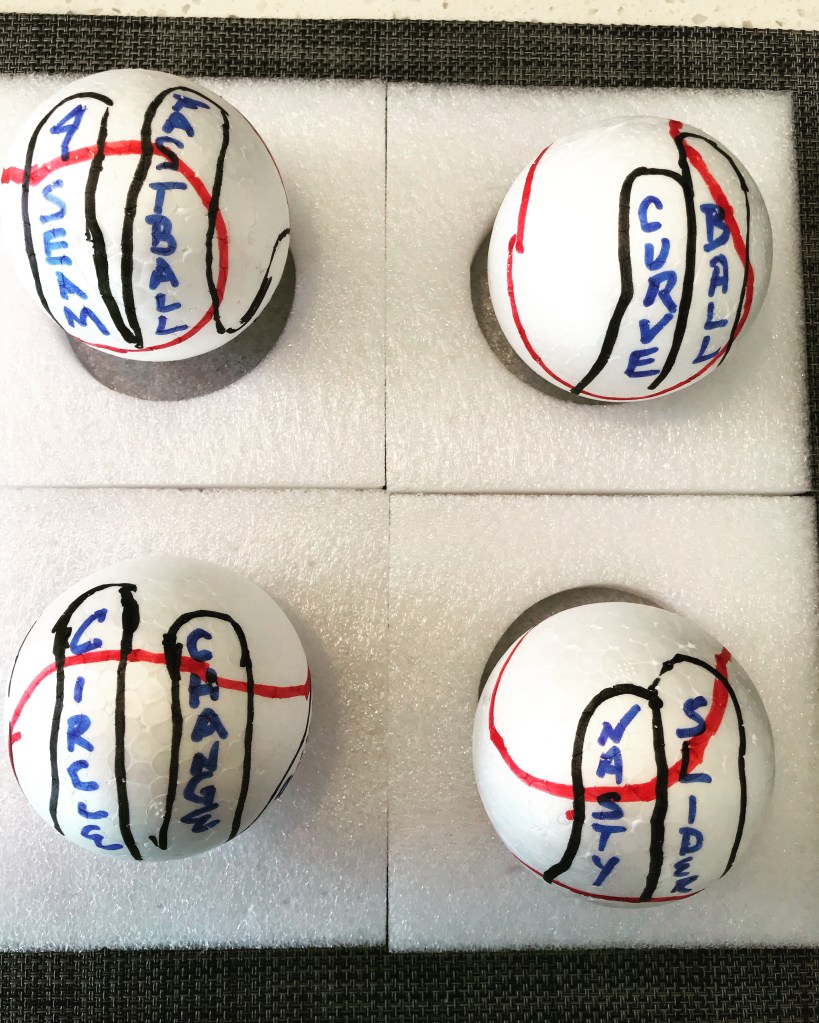
The quarantine training balls. Each grip illustrated
This young lady learned a nasty slider in 30 minutes using the quarantine training balls
This power curve was enhanced with the feedback of RM’s quarantine training balls.
Filthy moving changeup grip was explained using quarantine training balls
Four seam fastball quick tutorial
One knee fastball drill emphasizes staying behind the fastball with the fingers, hand, wrist, chin and chest

I Need Tempo

Great drill for a crucial aspect in throwing. Rhythm and Timing

Rhythm can be defined as a repeated pattern of movement. Tempo is defined as the speed of motion or activity. Rhythm and tempo are an integral part of athletics. However, it is rarely practiced or emphasized. Let’s change that. The above video is a great drill a quality

for pitchers. All the positions on the field need proper rhythm. The infielders have a tempo they get into with their feet and hands as the pitch is being thrown. This is what creates first step quickness’s and anticipation. The outfielders get into a rhythm as the pitch is thrown as they must be on the balls of their feet react to move in any direction. The great fielders have first step explosiveness. A catcher gets in rhythm with the pitcher and the way he sets up. How and when he flashes the target. Too late of a target isn’t productive, too early causes rigid ness. Aside from baseball, think of the best free throw shooters in basketball, they possess that rhythm and tempo at the line. Remember that repeated movement pattern and the speed at which it happens. How rhythmic is a hoops player when he is on a hot streak? How about the NFL quarterback in a good rhythm, he picks your defense apart with accurate , quick passes. Often a strategy to beat the best shooters or quarterbacks might be to disrupt their rhythm. That is how important rhythm can be to an Athletes success.

Timing drill. Ball from glove at proper time

This is another drill to work on the rhythm and timing of the proper ball from glove separation. If the ball comes out too late, the throwing or pitching delivery breaks down. A loss of power and accuracy results. The chance of injury increases. I am sure hitting coaches will see how important rhythm is to hitting and the timing of when the hitter begins he move to the baseball is crucial. The base runner and base stealer need to get into a rhythm with the pitcher to get good jumps and take the extra base. Think of ways to improve your rhythm and to be more consistent with your tempo. Take ownership of your tempo and work on it. Being able to repeat in crucial situations with help with your success whether your on the little league field or have 40,000 chanting your name, breath and maintain your rhythm and tempo.

How Fast is a Fastball

One pitch that every pitcher throws is a fastball, even if it is slow, we call it a fastball. Fastballs definitely come in different shapes, speeds and sizes. As far back as little league baseball there are those who throw harder than the rest of the herd. Those players are generally very good at baseball or softball. I mean the game is all about catching and throwing the ball, right? The pitcher throws the ball to the catcher, the batter hits the ball to shortstop who then catches it and throws it on to first base. Throwing the ball is an vital ingredient to the game and we all need to be good throwing the ball. Let’s talk about the fundamentals of the fastball. The grip, so often overlooked, is important to throwing the ball fast and with accuracy. The four seam grip is one all players should use when when they warmup and from each position they play. Physics tells us the four seam fastball , rotating quickly through the air keeps the ball straighter than the other grips, the ball has more spin and has better “ carry.” Alan Nathan, masterfully explains the physics of baseball and is the sports’leading analyst in this field. The video below explains the grip

Discussing the four seam grip

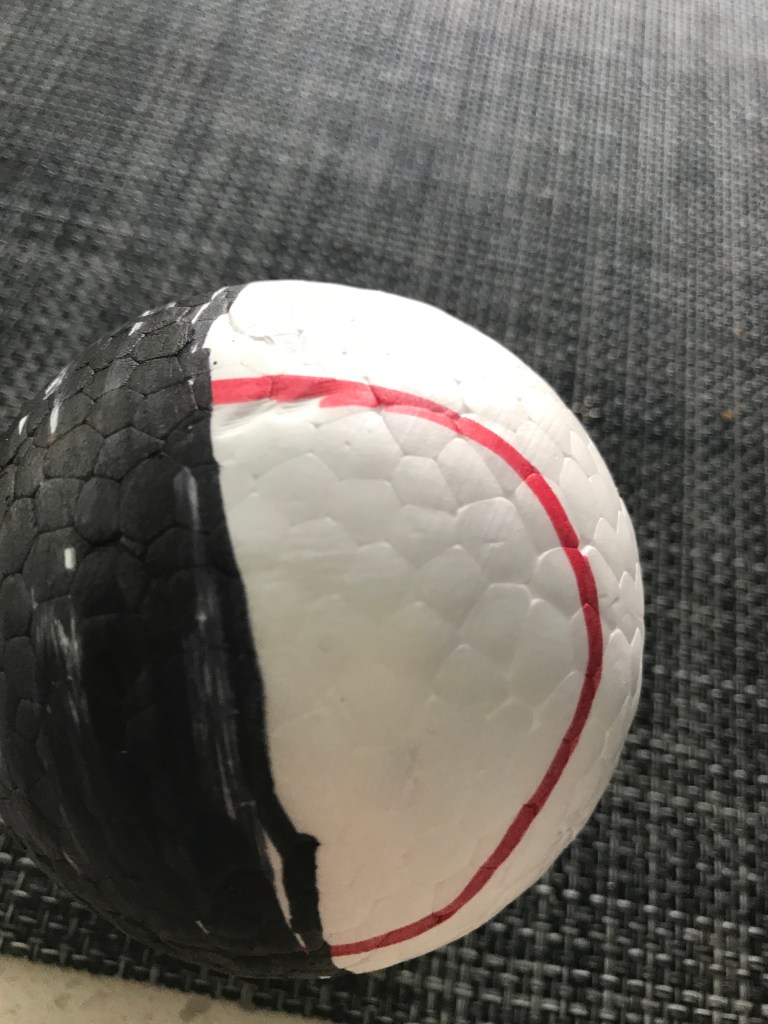
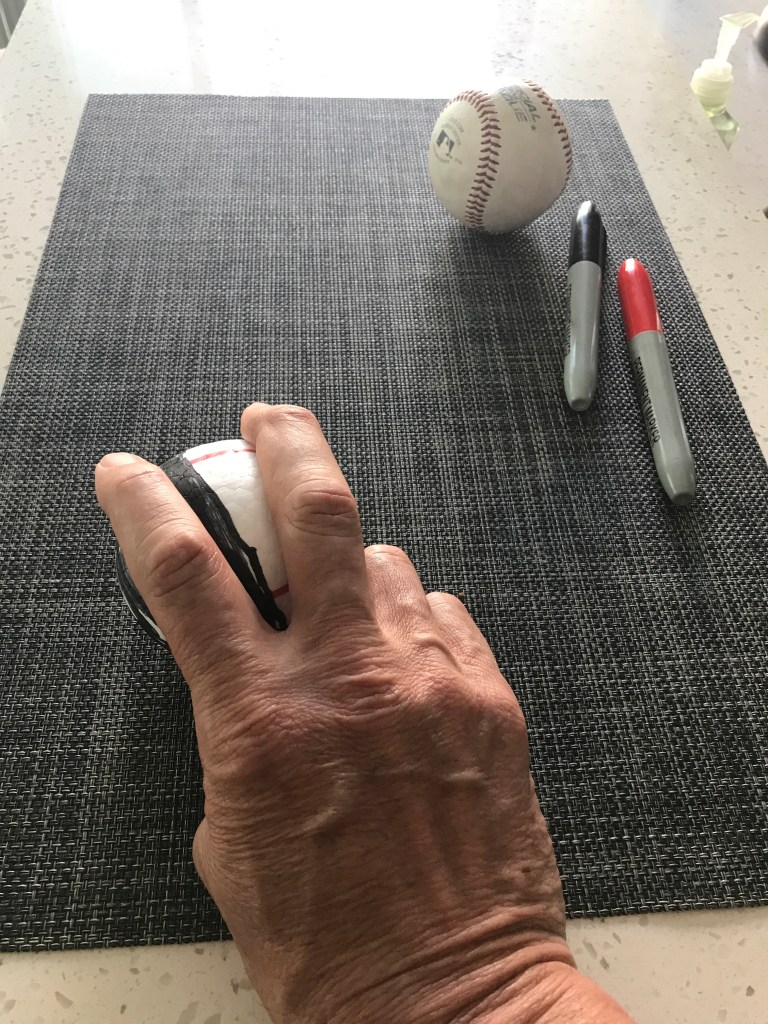
There are different fastballs; four seam, two seam, split fingered, cut and batting practice. Let’s stick to the most basic today, the four seamer. I have had the benefit of working from Little League to the Major Leagues and every level in between from travel ball to minor league baseball. I have coached girls as well, from youth to teens. The foundation of your fastball starts with your grip. Being good at throwing fast and accurately can take time but it is an amazing journey. It takes deliberate practice, consistency and takes being persistent. I have witnessed many players develop powerful throwing arms, I have seen many players increase their accuracy; success at any level is enjoyable and worth the time put in to improve. Spin on the baseball can give us feedback to whether we are throwing correctly or not. A good practice drill for this is to take your ball and color half of it black with a sharpie. ( dissecting through the four seam grip). The colors or shading of the ball will be apparent when throwing the baseball or softball properly- the thrower’s fingers, hand and wrist behind the ball at release. The wrist making a wave good bye motion and the fingers coming down and through the ball. I have seen coaches uses black electrical tape for shading the ball for this throwing drill as well. Once, we can do it right at 25 feet, take four steps back and so on. Another variation is to start with the throwing side knee on the ground. This let’s us just work on the path of the throwing arm, the grip and the release of the ball.

My inside practice ball. It is colored half black, detecting through the four seam grip area.
The Grip. Simple tools to get the ball ready. A hard ball for outside practice
One knee drill showed. Notice the fingers behind the ball at point of release.

We want to be able to measure our successes and gains in fastball speed. Once players arms are in proper shape there is nothing wrong with measuring a players progress. A tool I use is the Pocket Radar. I bought mine on Amazon. The measurements make it fun for the players, especially when they are young. Remember, that we want to celebrate effort and improvements. I have found that this quantifying of speed has kept my players working on their throwing fundamentals when they are at home, not just on the practice field. Coaches, we can measure speed on balls thrown from any where on the field, not just the pitchers mound. We get a baseline speed, record it and then measure improvement. Heck, I often measure the speed with the player throwing into a net. Build a strong foundation, grip it correctly and rip it with intent! Let me know how fast your fastball is.