
Teaching young athletes arm care and proper throwing techniques
Author: boo57
Former major league pitching coach for the Cincinnati Reds. Father of two amazing children who were college pitchers, one pitched underhanded. Two time World Series Champion. Have coached many over the last 32 years including the hardest thrower on the planet, a Hall of Famer, a 20 game winner, Major League All Stars and many young athletes who have changed the course of my life.
Velocity is baseball’s hot commodity .
Velocity in baseball has become paramount, necessary and much sought after. Teams from travel baseball, travel softball, to high schools., colleges and of course, professional baseball. The athlete is also chasing improved . Everyone knows that velocity has become the top dog, the big attraction. The data supports the fact regardless of what some coaches may be spewing out. Velocity is very important.
The data shows us that the average fastball in the major leagues continues to climb each year. Analytics has shown us that when velocity goes up your value as a pitcher goes up. The question is why is velocity trending upward, is it better genes, non GMO foods, what? The answer lies within sports worldwide. Why do Olympic records fall each year? Athletes are running faster, jumping higher, swimming faster at every world event. In 1954, Roger Bannister did the unthinkable, he ran a mile in less than four minutes. The four minute barrier is now the standard for those running the mile, over 1.400 male athletes have broken the four minute barrier.
I have been involved in professional baseball for 34 years. The standard for the fastball has dramatically increased over the years. Regardless, why are these pitchers throwing harder than ever before. Well, the first reason is in the strength and conditioning field. For years, baseball was slow to adapt to these principles, thinking pitchers would get too bulky to perform well. The author of a major league record 7 no hitters, Nolan Ryan, wrote that he used to “sneak” from the Angels facility to the football facility to lift weights. Sounds like he was on to something (this was in the 70’s), he arguably has the best fastball ever. I can tell you that when strength coaches were introduced in to baseball clubhouses there was push back, resistance. Let’s just fast forward, today every major league team has two strength and conditioning coaches, each minor league team has a strength coach. The training plans have gone from ” don’t get any one hurt” to an aggressive plan individualized for each player based on specific needs and the position each athlete plays. I used to hear the risk/ reward phrase thrown out all the time, not any more. It is all about the reward.
The use of pitching labs, wearable devices that measure movements, extreme high speed cameras have also aided in better instruction. The slow motion footage of an athlete throwing is more accurate than any human eye, regardless of how well that eye has been trained. The wearable monitors have helped researchers and coaches better understand how the human body moves most efficiently and most powerfully. Research has taught those people in player development( coaches) that arm action can be changed successfully and coaches must address this subject for athletes who want to throw hard . The new age pitcher is learning how his body should move during a throw, what each body part is responsible for and when everything should happen. Sequencing, is a new word for baseball but it can be easily explained to any 10 year old. If we ask them what did they put on first, socks or shoes? If they did it in reverse order- well that just doesn’t work that well, right?
Velocity is being taught, this is a newer concept developing over the last decade. If you have a young athlete, check the facts and program out before you commit. There are NO short cuts. Elite throwing is a toe nail to finger nail movement. Strength, power, range of motion and direction are necessary to get the velocity gains one is looking for. It also takes time and a commitment. Do not allow short term obstacles get in the way of long term goals.
What’s arm care?
I am leading an arm care class at Diamond Pro Fit in Raleigh, NC. Some parents have asked me what this class consists of and other parents/ coaches have inquired why does their young athletes would need to take such a class. Well, I can share some information from a solid web site on this topic: stop sports injuries.org. ” Injuries to the elbow and shoulder in children is becoming a epidemic. Thousands of children are seen each year complaining of throwing elbow and shoulder pain.” The word epidemic should be frightening to every parent of a young softball or baseball player. The word epidemic is not only used in this article but other articles concerning research of youth elbow and shoulder injuries. I myself had two pitchers in my family, one pitched over hand and the other a flame throwing windmill pitcher. I battled shoulder problems from the time I was 16 until the pain forced me into retirement after a shortened professional career.
The science of injury prevention has come along way since then, leagues and states have mandated pitch counts for safety but many have chosen to circumvent those rules playing on multiple travel ball teams. This particular arm care class is educational as well as functional. We not only perform the exercises with precise detail, we learn and discuss the meaning of such terms as volume, recovery, dynamic warmup and activation. Each athlete goes through a functional movement screen, which I happen to have a certification in. We as coaches must is acknowledge that each athlete moves differently, is made uniquely and are not little adults, they are growing children. We utilize several tools in the class taught at DFP. We talk about the movements the athlete mustmake when throwing the ball properly. We perform movements that are required in an elite throwing motion; such as, rotation, weight transfer, posture, tilting of the pelvis, a proper hinge, arm paths, scapula retraction. And make it simple. We educate and execute a solid shoulder warmup routine that can be done at any field with a fence. We use J Bands and they are fantastic. We preform a med ball routine that prepares the thrower for all the rotations he or she is going to do over the course of a game. We utilize what I call the Mc Coy leg routine, prepared for overhand throwers by a qualified strength and conditioning specialist who was a former baseball player as well as my son in law. We have a fire up the scaps routine given to me by the best physical therapist for baseball in North America. We use plyo balls and throwing drills derived by Driveline. These throwing drills are solid and I have performed hundreds of reps before teaching the athletes in the class. The weighted balls are a tool just like the J bands and the medicine balls. All balls have weight, a baseball is 5 ounces, a softball is 7 ounces, a football weighs 16ounces and a wiffle ball is less than an ounce, in case you were wondering.
This arm care class teaches the athletes why we do an exercise and how often, how many repetitions and at what intensity level. We have days for recovery. We talk strength, mobility, stability and execute exercises that promote each of these important facets in elite throwing. We talk sleep, nutrition, hydration. We also state over and over, “listen to your arm”. It is a requirement to for throwers to take recovery days and we learn movements that enhance recovery. In my opinion, we have the best recovery movement out there. This shoulder movement can be done anywhere, no gym needed. This class includes soft tissue work done on Perform Better foam rollers and TriggerPoint deep tissue massage balls. These are investments every athlete should make and put in their baseball bags. We utilize resistance bands in our recovery work as well. The bands are great for leg workouts and well as the scapula wall crawls. In closing, learning a proper warm up routine is crucial. Taking time to recover is a must. The throwing motion is a toe nail to finger nail movement and we must learn the proper sequence of movements and how each body part plays an important role. Strength,, range of motion and direction all play a role in arm care as well.
Just a nice range of motion drill from DFP Arm Care.
The Comeback
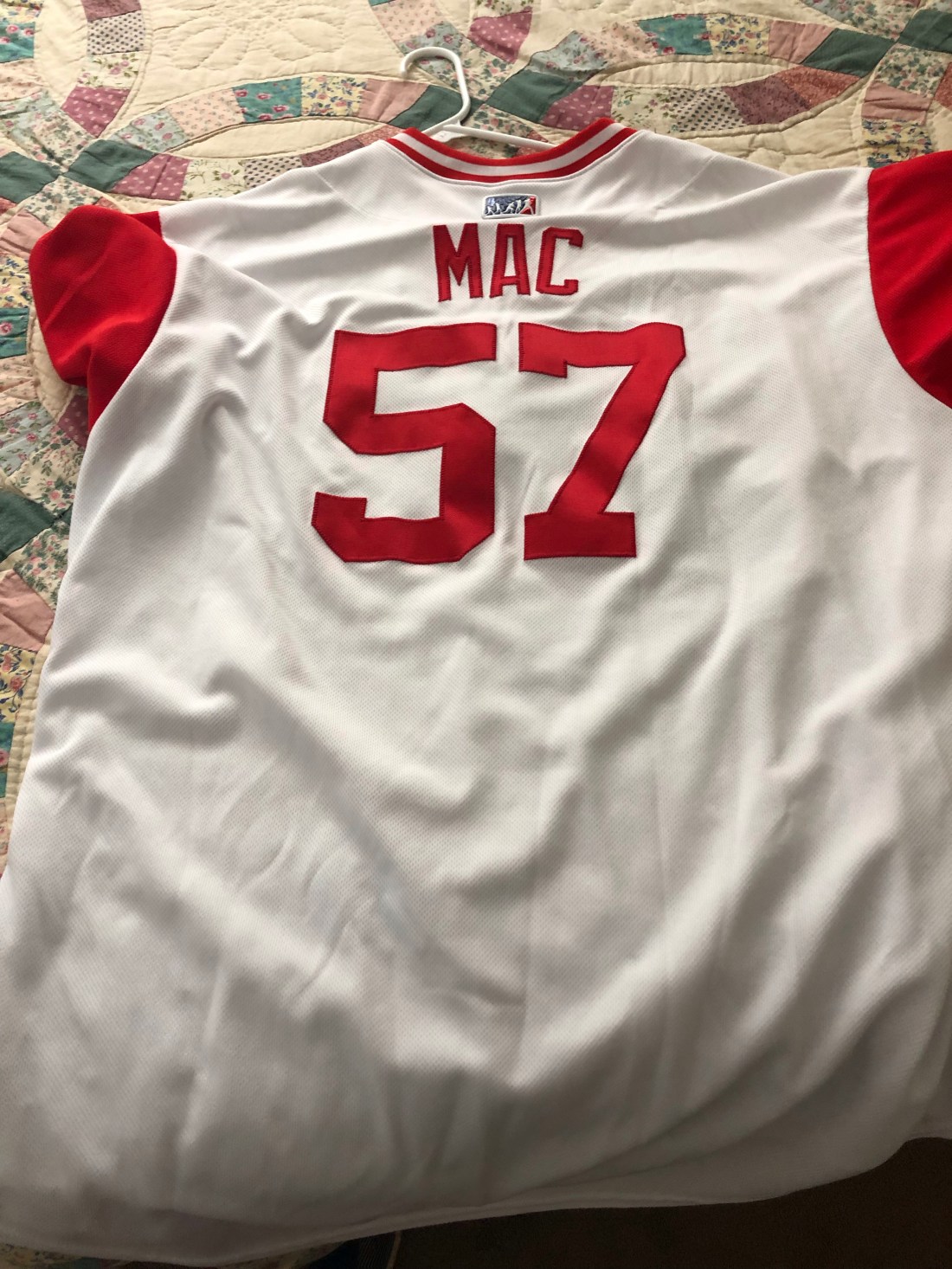
I am 56 years old, close to 57. I am a former professional baseball player, a pitcher to be exact. My last competitive pitch was 32 or so years ago. I have been a minor league coach, a pitching coordinator and a major league pitching coach over the last 33 years. The reason for the background information lets the reader know where I have been, the Comeback, is where I am going. I am going to have everyone join me on this amazing comeback. The main obstacles, besides the obvious, is that I have had two hip replacements, I have had three knee operations, a shoulder repair, a torn elbow ligament and top of this aging process, arthritis is trying to crawl up my spine and into these long, thin fingers.
Well, you see day one of the comeback, an embarrassing and miserable 53 miles per hour, measured by the amazing pocket radar smart coach app. Another bit of pertinent information is that I am leading an arm care and velocity training class, twice a week at Diamond Fit Performance in North Raleigh, NC. Yes, this former Major League coach of eight years is pouring it out twice a week for his students, aged 11 to 19. Since the 2019 season ended I have received hard earned certifications in Driveline Youth Baseball Training, Rapsodo Pitching, Functional Movement Screen and I have finished all but the the final step of Driveline Foundations of Pitching. Put that on top of 33 years in professional baseball experience and I think we have the makings of a well educated class. The students are posting personal records for velocity each week but the real test will come as I begin to put myself through the rigors of the arm care and velocity training. I have consulted with physical therapists, certified strength and conditioning coaches as well as my knowledge attained from the new certifications for class content. Oh yea, did I say I was a major league pitching coach as recently as 2018? I have some advantages in my class, I once pitched for Dr. Mike Marshall, the creator of weighted ball training. Hmm, the plot thickens doesn’t it? Did you know Mike Marshall pitched in 106 games in 1974, won the Cy Young Award that year. He was 15-12 with 21 saves. He logged 208 innings pitches. Crazy! We cant even get starting pitchers to 200 innings in recent seasons.
I will keep everyone updated as the comeback moves forward. Lets put all the new concepts to the test! Along with some ancient concepts as well. Very few coaches have been privy to work with the hardest thrower ever, Aroldis Chapman, as well as with Dr. Mike Marshall, a Hall of Famer closer and many other of the best pitchers, coaches, people and analysts in the game of baseball. Next time, lets see if I can improve my velocity and throw my age.
Fired
On April 18, 2018 the Cincinnati Reds lost 2-0 in Milwaukee to the Brewers which dropped the team record to a woeful 3-15 mark. Soon after the team’s charter flight landed in St. Louis, the buses pulled up to the hotel, I was summoned to manager Bryan Price’s room. The entire coaching staff was crammed inside, along with the medical staff and other members of the traveling party. I was informed that I has been fired, along side Bryan, who delivered the news. The room was quiet briefly before Mr. Price began to speak, eloquently as always. I just could not hang around to listen, so many things were running through my head. I told the group I would ” see them on the other side” as I slid out the backdoor. I have worked in this organization for 32 years. Gathering my thoughts I called my former wife to let her know what happened and everything would be fine. Most importantly, call our children so they hear it from her rather seeing it on a ticker at the bottom of an ESPN broadcast. I also had a text message waiting from the general manager of the team to come to his room as well. It was an eerie walk , but is part of a coach’s or athlete’s life. That does not make it any easier. The men were cordial, direct and I was told ownership wanted a new voice- and basically that was it. I had a feeling this was coming, just the vibe I had been given since an encounter with ownership during spring training at a party that featured all the owners and staff for a gorgeous dinner on the side of Camelback Mountain.
I walked quickly to my room to pack and sort out thoughts. The traveling secretary, handled the travel back to Cincinnati where a driver took me to the stadium. The clubhouse attendants are waiting to help, the security team is there to help, all involved are truly professional as I pack my things. A person can accumulate a plethora of items working somewhere for eight years and it took some time to consider which belongings were was junk, what I wanted to take home. I spent hours going through paper work, disc drives, computer documents as well as clothes, shoes, gloves. I was finally ready to say goodbye to the place I loved to come to work to every day. I even showed up to work when there was no game that day. I signed a professional contract with the Reds in 1986. A legendary scout, George Zuraw, tendered my first contract. He told me the day my contract was inked to not be afraid to be the first one there(at the ballpark) and the last one to leave, I did that every day for over 31 years. I walked out of the stadium for the final time that day with my head held high.
Get behind it
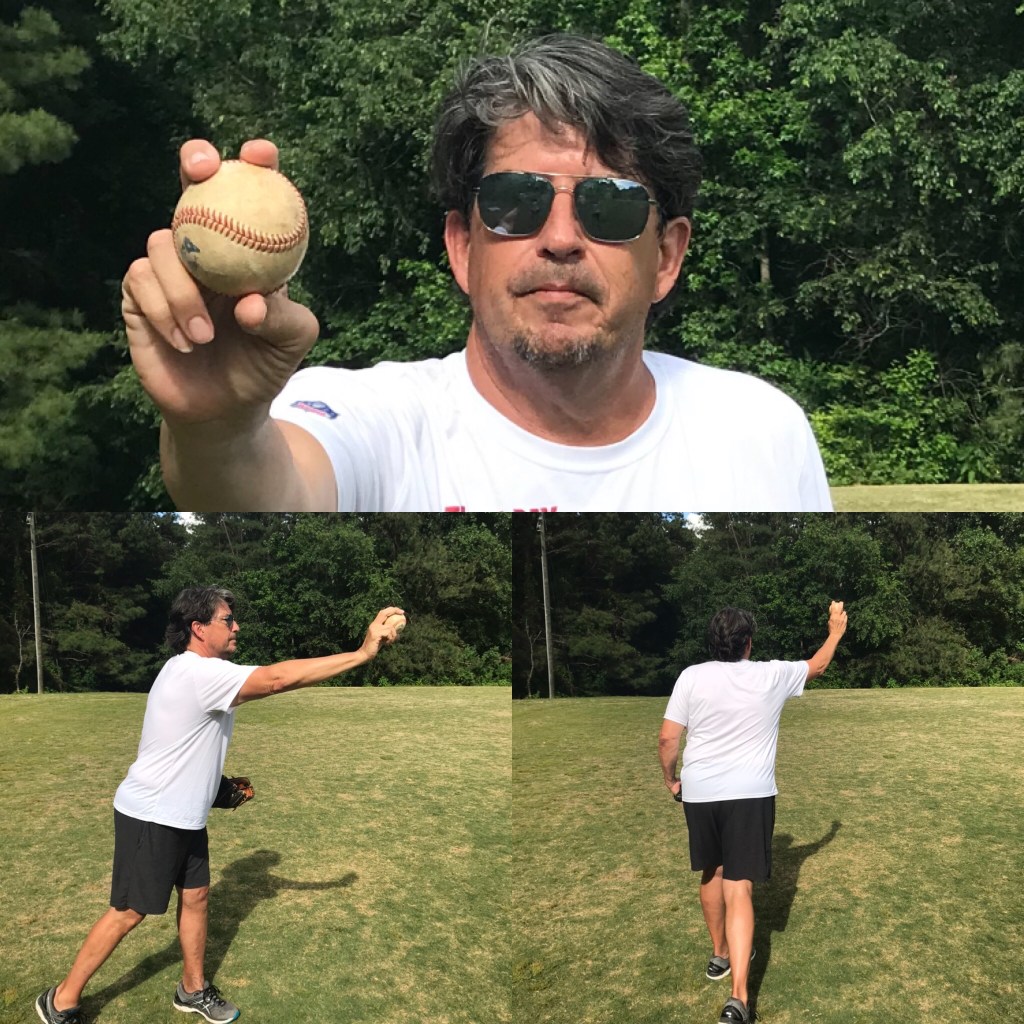
Throwing a ball the properly and powerfully requires a few absolutes. It also allows for individualism and warrants that the thrower eventually allow his or her athleticism shine. I want to encourage the thrower to take ownership of his or her throwing delivery. One area that the thrower must get right is that at release point we must be behind the ball. I hope to explain exactly what that statement means through some simple instruction and video.
When the thrower gets behind the ball, his fingers, the middle and index fingers, are powerfully on the ball at release, peeling the seams back to produce mighty back spin. Having one’s hand behind the ball, along with a good wrist snap gives the ball proper spin direction as well. ( imagination your middle finger as chalk, drawing a perfectly straight line on the chalk board, this equates to the right wrist snap). As you see in the pictures, the forearm is also behind the ball. And as any properly flowing kinetic chain, the throwing shoulder is also behind the ball at release point. As well as the chin and chest. Now that is a powerful position. The energy created at the ground has transferred up the legs, through the body and come out at the finger tips. An amazing motion to conquer and fun too. You can imagine yourself trying to push a wall down, go ahead and try. To exert the most force against the wall, you will find yourself in a similar position to the “behind the ball” position when throwing your favorite round ball.
One can see in the video that the torso, waist are in line with the intended target as wee. A throwers legs provide direction, among others factors, but proper direction of the stride leg gets us in position to be behind the ball with out torso, chin and chest. Try this. I am confident you know how to get behind each throw.
Learning to Fly
My experience in baseball has encompassed many areas and reached great heights. I played the game professionally, I coached for three decades from the rookie leagues to the major leagues. After a near eight year run as a major league coach, I climbed back on the busses to coach in the minors once again last season. The little league fields have not escaped my coaching journey, my son played baseball from age seven to age twenty three. I have coached girls Fastpitch softball, my daughter was one bad ass Division I softball pitcher. My point of sharing these experiences is that the author of this article knows a lot about throwing a baseball or a softball for that matter. This article is not about me, it is about teaching kids how to throw properly it just happens to be written by a man who broadly smiles when his students improve.
Kids come in different sizes and shapes. They do come in varying measures of athleticism, These boys and girls have unique personalities and, this is an important and, they come with their own learning abilities and style. The hardest thing in coaching is finding ten different ways to say the same thing. A great coach establishes some kind of relationship with the athlete to where The coach has some idea of what makes the student tick. What other activities do they have in their lives? Another question that is important is, where has your young student been in their baseball classrooms. What I mean is, have they had a prior pitching or throwing coach. What did the coach teach? What is extremely common today is what have you learned on the internet about pitching or throwing a ball. There is so much information available, it is simply confusing. Many folks are capable of gathering data and information but few are capable of breaking it down to the student standing in front them, speaking that child’s language, creating drills that are individual for his or her needs.
When it comes to throwing, consider this lesson one. An assessment of a players skill level and athleticism can come from observing a simple dynamic warmup and by playing catch. Some youngsters can move on to the pitching portion of instruction. However, many children need help learning to fly ( throwing a ball with force and a smile). Throwing is a toe nail to finger nail movement. Each of the body parts in between play a key role. The way each of those body parts move is important , when they move, how much range of motion , how strong is each muscle or body part is crucial, as well.
I gain a lot of information by playing coach with the pitchers. And I have played catch with many little leaguers, major leaguers, softballers, major league all stars, and even a baseball Hall of Famer. There is a lot to be learned by paying catch, (please read Playing Catch and The Rhythm of the Universe, an article written by David Laurila on the Fan Graphs web site). I like to see how the pitcher is gripping the ball, this detail is very important. The grips effects the direction the ball spins, the grip can help or hinder the amount of spin and how the thrower commands the ball. Once, we have the correct grip, correcting the athlete from the ground up is the most effective methodology. Footwork is a critical cog in throwing powerfully and accurately. Time spent on developing elite footwork takes time, effort, patience but in the end we need this part of the foundation to be rock solid. The throwing side foot plays a big role. Teaching your thrower how it should work, what it feels like when done correctly is a big teaching moment. The lead leg action falls right in with the other moving parts of the throwing motion and gives the pitchers good direction towards the target and the landing leg will eventually stop the forceful momentum creating by the pitcher’s back side as the ball is delivered. Sounds complicated but it isn’t. The glove arm has a purpose and this is often taught incorrectly Think of this, the catcher has a hundred dollar bill in his mitt and as you begin your move towards home plate, the ball out f the glove- you are going to teach into that catchers mitt with your glove, get the hundo and put it in your shirt pocket. Simple stuff. The motion of the throwing arm needs some individualism to it. Remember, the length of this lever is always changing if the thrower is still growing. The best arm motions I have seen come from taking the ball from the glove with fingers on top. And think your throwing hand traveling in a circular motion back and then moving the arm forward. The best throws will come from your elbow passing the ear at shoulder height. Having you hand and fingers behind the ball at release is extremely important to a successful toss. Some throwers have found their ideal arm angle or arm slot by throwing balls heavier than baseballs, like a football. When thrown beautifully the football has a spiral. When using heavy balls, remember to use your baseballs at the end of the practice session. Let’s keep throwing fun, let’s have a growth mind set that everyone can improve and let’s teach with simplicity, passion, and facts.
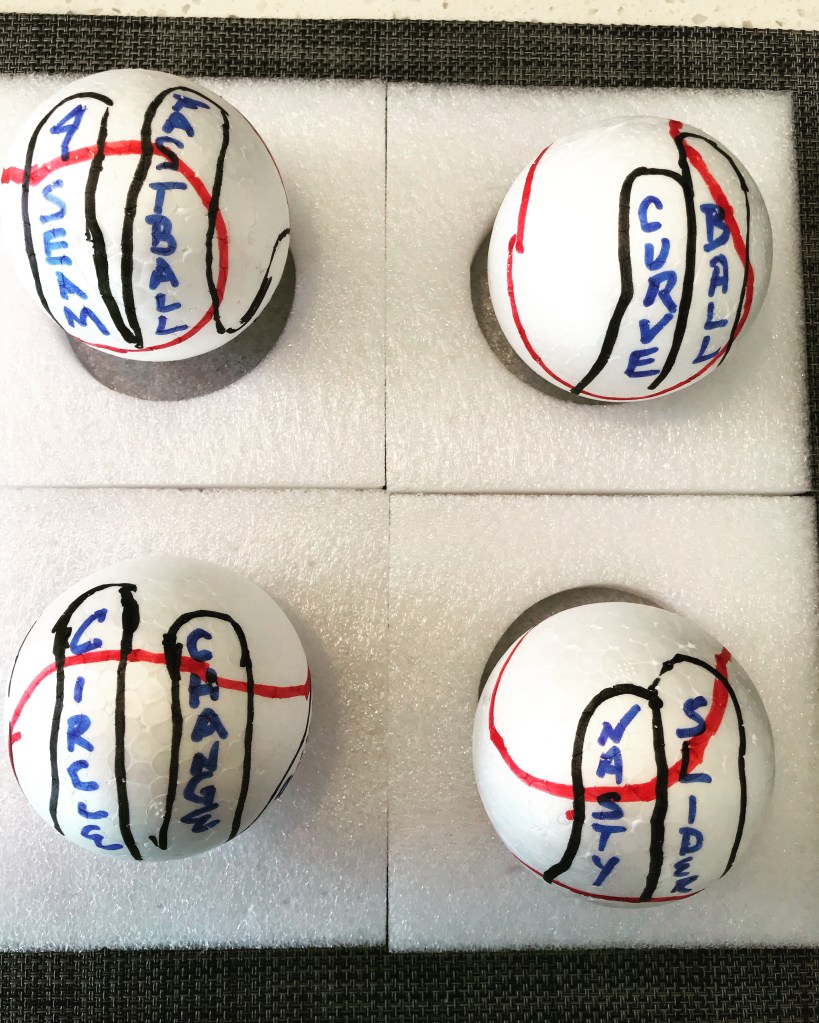
The basic four
I Need Tempo
Rhythm can be defined as a repeated pattern of movement. Tempo is defined as the speed of motion or activity. Rhythm and tempo are an integral part of athletics. However, it is rarely practiced or emphasized. Let’s change that. The above video is a great drill a quality
for pitchers. All the positions on the field need proper rhythm. The infielders have a tempo they get into with their feet and hands as the pitch is being thrown. This is what creates first step quickness’s and anticipation. The outfielders get into a rhythm as the pitch is thrown as they must be on the balls of their feet react to move in any direction. The great fielders have first step explosiveness. A catcher gets in rhythm with the pitcher and the way he sets up. How and when he flashes the target. Too late of a target isn’t productive, too early causes rigid ness. Aside from baseball, think of the best free throw shooters in basketball, they possess that rhythm and tempo at the line. Remember that repeated movement pattern and the speed at which it happens. How rhythmic is a hoops player when he is on a hot streak? How about the NFL quarterback in a good rhythm, he picks your defense apart with accurate , quick passes. Often a strategy to beat the best shooters or quarterbacks might be to disrupt their rhythm. That is how important rhythm can be to an Athletes success.
This is another drill to work on the rhythm and timing of the proper ball from glove separation. If the ball comes out too late, the throwing or pitching delivery breaks down. A loss of power and accuracy results. The chance of injury increases. I am sure hitting coaches will see how important rhythm is to hitting and the timing of when the hitter begins he move to the baseball is crucial. The base runner and base stealer need to get into a rhythm with the pitcher to get good jumps and take the extra base. Think of ways to improve your rhythm and to be more consistent with your tempo. Take ownership of your tempo and work on it. Being able to repeat in crucial situations with help with your success whether your on the little league field or have 40,000 chanting your name, breath and maintain your rhythm and tempo.
Rest In Peace- Justin Mallett
An amazing part of being a coach in professional baseball the last thirty years is the amount of unique people that you meet. These baseball players come from all walks of life. The kids arrive from every region of the United States and from every corner of the world. The players come from very different socio economic backgrounds as well. I feel fortunate to have met so many young men over the many years. I taught them and unknowingly, they taught me. I have a certain curiosity about people. A quality coach will always try an establish a relationship with his player. I once read “ you must know where a person has been before you can tell them where to go”, I believe that statement to be true. The only way to find out where the person has been, is to ask questions. This question and answer conversation can lead to a relationship with the player that allows for teaching, listening and it allows for the acceptance of constructive criticism. This step is a building block for getting better prepared to be a successful major league player. I could write about former players and how our player/ coach bond has continued once their careers ended. Or even how the influence of our time together impacted their lives, their careers and now their own young baseball player. But this story is dedicated to one smiling young man from the rough area of East St.Louis.
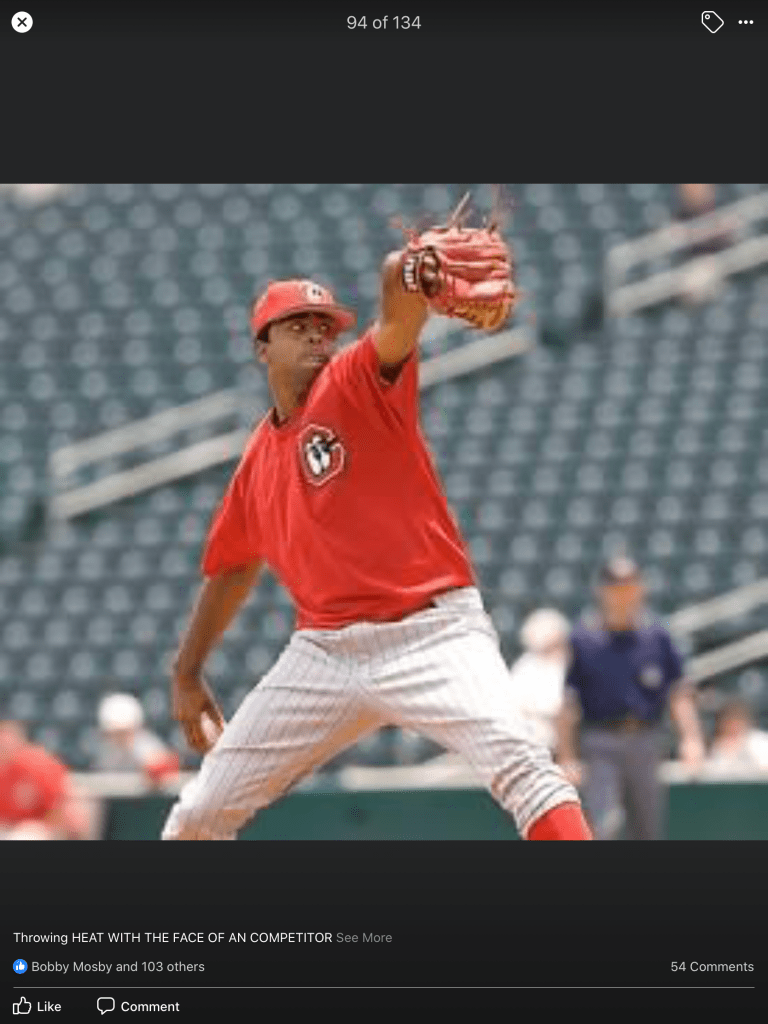
1981-2020
I met Justin in 2006 when I left AAA Louisville to become the minor league pitching coordinator for the Cincinnati Reds. Justin, the tall, enigmatic right handed had signed a professional contract with Reds in 2003. My first impression was a memorable one. Justin introduced himself with a large smile and a firm handshake ( he had big hands which are great for pitching) Justin was a good citizen who enjoyed minor mischief. It wasn’t uncommon to hear his last named yelled from across the training complex. This is probably about the time I asked Justin how he got here and where he has been. He educated me about ESL. The city was named America’s most dangerous and Mally’s real life descriptive account was surreal. I always found time each day in training camp to check on my new friend and I developed a soft spot for some of his fun loving mischief.
One of the big days in minor league baseball camp was the pitchers’ two mile run. It was a conditioning test. All the pitchers had to complete the run in fifteen minutes or less to be able to make a team. If one fails the test, they can be retake it after showing up at 6 a.m. for extra conditioning. The running course goes outside of the training complex, along the surrounding sidewalks and ends up on Field 4, right field line. The training complex is made up of four practice fields, the game stadium, covered batting cages, a half field, lockers rooms with administration buildings, atop. There is also a small pond. Trees or tall shrubs surround the outfield fences on the four practice fields, this not only has nice curb appeal for the fans but allows for the players too see better while hitting. If there is no dark background for the hitter, the pitch can be hard to see from the pitcher. So, the trees provide a cover for those looking out and for those trying to look in. The test begins at the gate leading out to the street. A strength coach starts the group there and meets them inside the training complex on field four, where the run ends. So, the view of the players running can be shaded or even blinded by those coaches on the inside, who are timing the conditioning test. The race can create lots of yelling, pulling for one another. I waited near the finish line and there were screams of how much time was left,the yelling for your partner to make it. Out of the shadows sloppily running through the gate was my man, Justin Mallett. He was going to make it. It was a little surprising because Justin was struggling some with the daily running leading up to the two mile test. I was happy for him, as were his teammates all of whom he had endeared himself. Later, that day the chief strength coach, creator of the grueling test came to speak to me. He was angry. He was grouchy! He told me one of my pitchers began running the two mile run, that player then ran into the shrubs, pulled out a bicycle and rode most of the run. He the disposed of the bike and ran to field four to pass the test. That player was Justin Mallett. I laughed. I also thought it was genius. He wasn’t punished if you were wondering, what ingenuity!

In late March of this year, Justin was killed in a traffic accident on US 41 in Palmetto, Florida. He was only 38 years old. Justin was fatally hit by a ticketed motorist for running a stop sign. Justin was on his motorcycle. He left behind many grieving friends. He sadly left behind a devastated family. I am thankful for having crossed paths with this smiling young man. I am saddened to know he is gone. Justin created many memories for those who knew him and he established countless relationships that will withstand this tragedy. God Bless you, Mally. RIP
 No BS Baseball